
Staten Island Resident Lookup Records
A resident lookup in Staten Island has a narrow purpose: confirm whether records point to the same known person. The best starting record depends on the question. A parcel can establish that someone was a recorded owner or a mailing contact. A court index can identify a party and case context. The voter form can confirm a supplied identity combination, but it does not produce a public list of people at an address. Vital, adoption, and family records use separate rules and custodians. None of those sources alone proves a present residence.
| Record | What It Confirms | Where | Access |
|---|---|---|---|
| Parcel and deed record | Recorded owner, party, lot, sale, or mortgage context | NYC DOF and Richmond County Clerk | Public web and clerk-counter paths |
| Voter confirmation | A supplied identity combination may match an NYC voter record | NYC Board of Elections | Known-person form, not a roster |
| Court docket | Party role, case number, court, and status context | New York courts and the clerk | Public index; fuller files may be at the clerk |
| Vital or family route | A life event or a permitted family-history connection | NYC agencies or the NYS Adoption Registry | Restricted, record-specific access |
| Local history collection | Earlier address, obituary, directory, or family clue | NYPL and Historic Richmond Town | On-site collections and reference help |
When an address is known, begin with the NYC Property Information Portal, save the borough-block-lot identifier, then use the Richmond County Clerk land index for recorded document parties. When only a name is known, preserve alternate spellings and do not force a match. Staten Island is also Richmond County, yet a historical source may say Borough of Richmond or a former town name. That local naming difference can explain an empty search without proving that a person was absent.
Note: Record the source, date, spelling, and result type before moving to a second custodian.
Verifying a Staten Island Resident
To look up a resident accurately, first anchor a name to a fact that is not simply another copy of the same claim. An address, a party role in a recorded instrument, and a dated court entry are different kinds of evidence. Separate a property situs, the physical parcel address, from a mailing address. A mailing address may belong to an attorney, bank, relative, or another property. Likewise, a person named as a grantor, grantee, heir, witness, or counsel in a filing is a participant in that record, not automatically a Staten Island resident.
- Write the full name, known aliases, age range, and an address or borough-block-lot number in a research note.
- Check the parcel and land-record trail for a dated owner or party relationship, keeping situs and mailing fields separate.
- Search court party names with near-name variants, then compare court, dates, role, and case number rather than matching on the name alone.
- Use a record-specific custodian for any vital or family question, and obtain a certified copy only when the responsible office says one is available to you.
Two matching details are better than one. A surname plus a street is still weak on a dense borough. A date range, an address history, a spouse or estate reference, and the document context help resolve same-name results. If key details disagree, mark the result as unresolved. A resident lookup should retain uncertainty rather than quietly attach a record to the wrong person.
- Docket
- A court's running case record, usually listing parties, filings, appearances, and status information.
- Index and image
- An index is a searchable entry or list. An image is the scanned document itself, which may have separate access or redactions.
- Certified copy
- A copy issued and authenticated by its custodian. A search result or ordinary image is not the same thing.
Staten Island Resident Voter Match
The NYC voter form is a confirmation tool for a person already known to the searcher. It requires the spelling held in the voter record and five identity fields. It does not offer reverse address searching, a block roster, ballot choices, or a full date of birth in its result. A non-match can come from a spelling, date, ZIP, apartment, borough, or status difference. It is not proof that the person never lived in Staten Island.
| Field | How the form uses it |
|---|---|
| First name and last name | Enter exactly as registered. |
| Birth date | Supply month, day, and year. |
| Borough | Select Staten Island for a Richmond County voter. |
| ZIP code | Use the ZIP associated with the registration. |
A captured view of the NYC voter confirmation form shows the exact-field approach used for a known person.
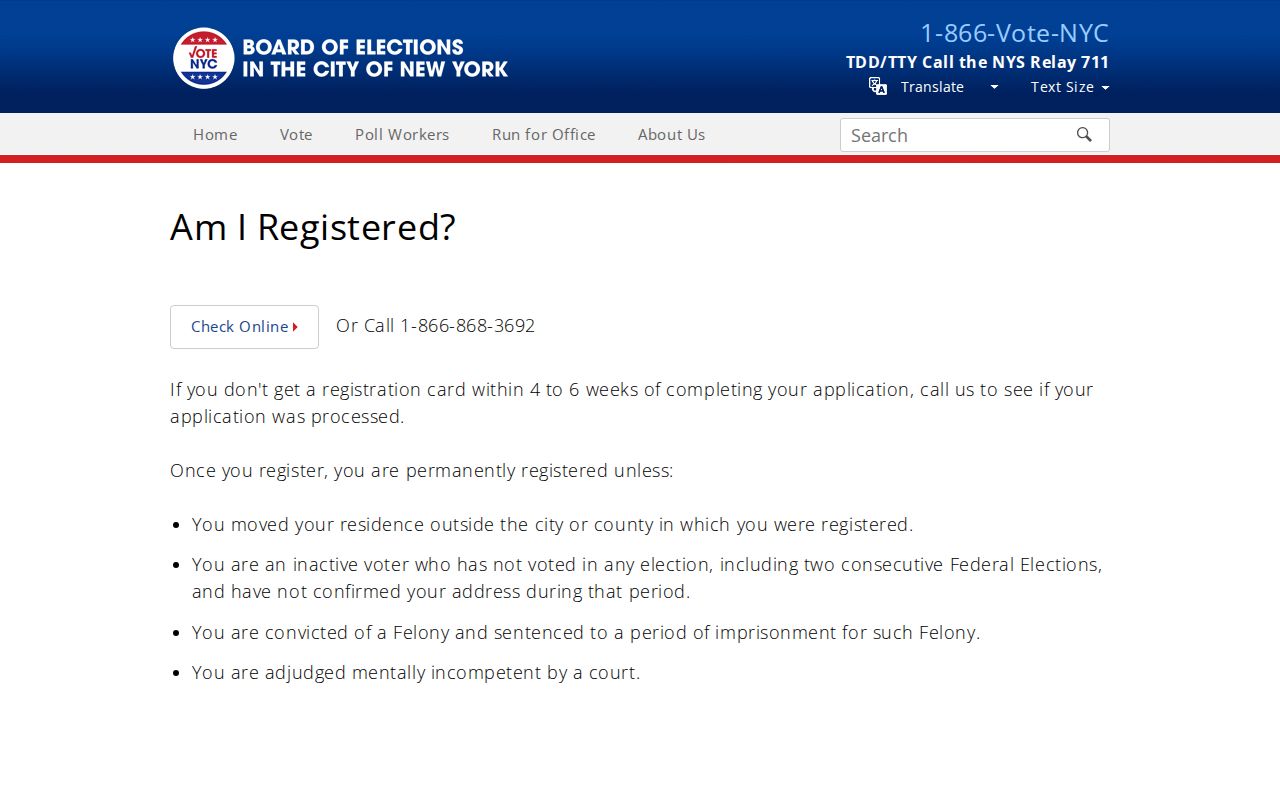
Use that result only as a match or non-match under the form's limits. Voter-registration information has separate access rules, and a larger voter-file request requires an elections-purpose statement under New York Election Law.
The NYC registration application asks for more information than the public confirmation form returns. The application fields should not be treated as a description of the public result screen.
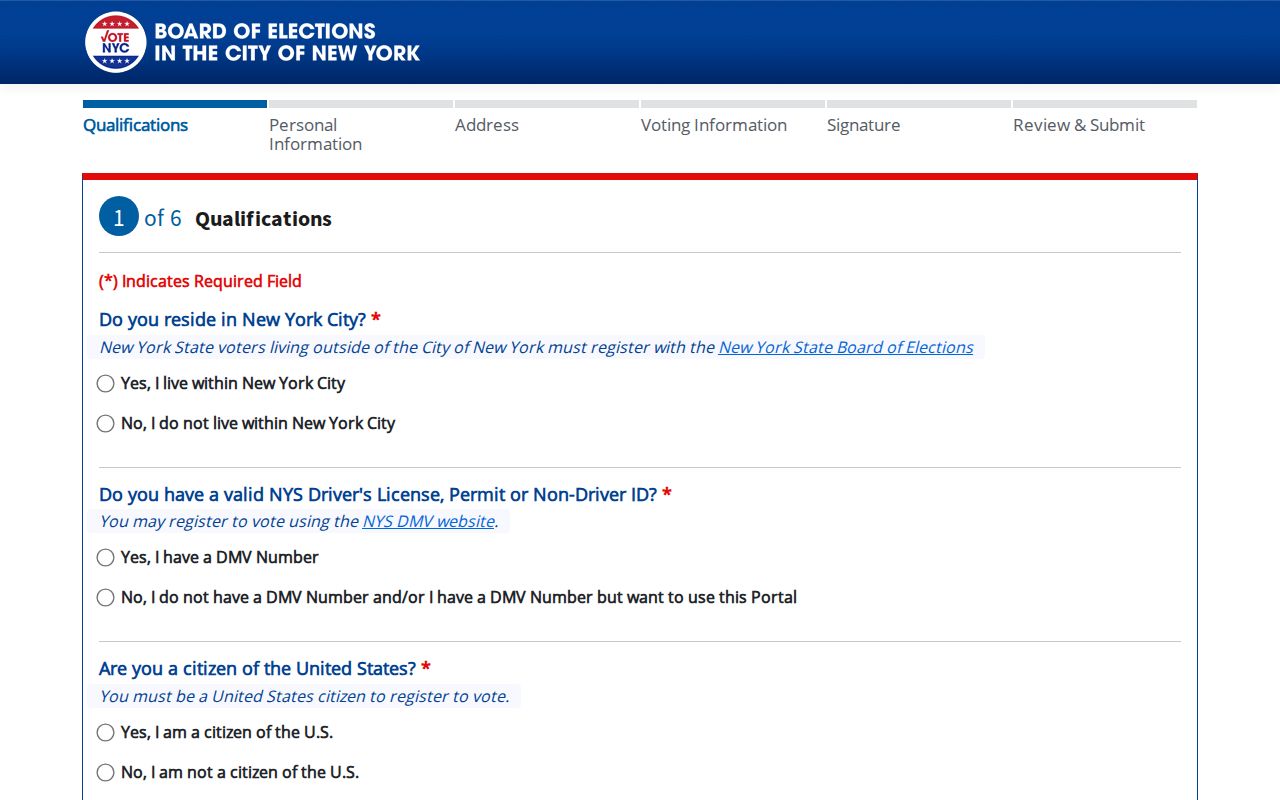
The distinction matters: a person can submit contact, address-history, and signature information to register without those items becoming a casual public lookup output.
Staten Island Resident Court Context
The New York e-Courts hub links WebCivil Local, WebCivil Supreme, WebCriminal, and WebFamily. Each route has its own scope. WebCriminal permits a name search with at least the first three letters of a last name and the first two letters of a first name, or a full docket number in its stated pattern. It gives future appearance information for selected courts. It does not display warrants, finished cases, or sealed matters. WebFamily has stronger confidentiality limits and is not a casual name-search route.
A court search can create a useful verification trail only after the person is already anchored through separate facts. A docket entry may contain an address for a party, heir, witness, or counsel. It does not turn each named person into a local resident. The state criminal-history name-and-date-of-birth search is separate from the docket systems, costs $95 plus a convenience fee, is not certified, and excludes sealed records.
| Result item | What to record |
|---|---|
| Party and role | Name as indexed and whether the person is a plaintiff, defendant, petitioner, or another party. |
| Case identifier | Docket or index number, court, and term. |
| Dates and status | Filing date, appearance date, and the displayed disposition or status. |
| Access state | Whether the result points to a decision, order, image, redaction, or clerk request. |
When an index does not resolve the question, ask the court clerk about the case file, paper or electronic copy, and certification options. Public-access terminals and the clerk counter can expose archived or fuller docket metadata than a future-appearance screen. Bring the full name, aliases, date range, case type, and any index or docket number. The inspected research did not establish a fixed Richmond copy fee, so confirm the current charge before ordering.
The PACER federal case-access service is a separate account-based route for Eastern District matters, including those connected to Staten Island.
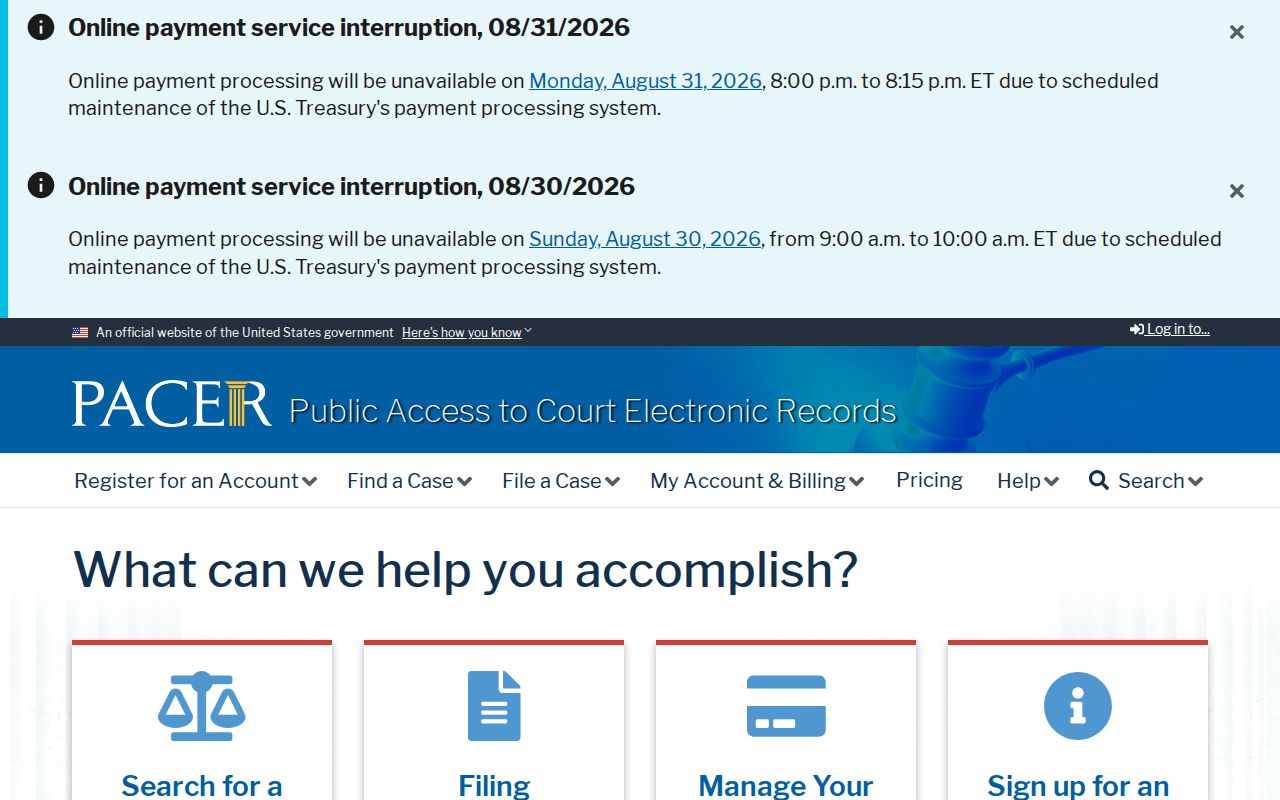
A federal case reference still needs the same context checks: party role, court, dates, and the boundary between an indexed name and a verified person.
Staten Island Resident Property Parties
For a known address, the DOF parcel card is a practical bridge to the BBL, the borough-block-lot identifier. PIP accepts address, intersection, BBL, borough and block, condominium, co-op, and several special-lot searches. A borough-block search highlights the block and exposes Tax Map History. The parcel card may show tax class, building and land characteristics, assessments, exemptions, sales, mortgages, zoning, and district links. Preserve the BBL because it is more stable than a street spelling.
Then use the Clerk's block-and-lot, party, date, book-and-page, or document-number paths to identify a deed's buyer, seller, recording date, and legal description. A deed can show a transfer party. It cannot by itself prove who was living there at the time. A mortgage, lien, release, or satisfaction can add timing context, but it is not automatically a transfer. If the web index stops, use the clerk counter, historic books or microfilm, and local archival finding aids instead of inventing an online coverage date.
Note: A tax mailing address is an official notice destination, not a finding that the addressee occupies the parcel.
Staten Island Resident Family Routes
Vital-record custody changes inside New York City. For a birth or death in Richmond County, the state vital-records path is not the endpoint because the five boroughs are excluded from that state certificate route. NYC DOHMH handles NYC birth and death events, while the NYC City Clerk Marriage Bureau handles marriage licenses. NYS DOH retains divorce certificates for both New York City and the rest of the state. A genealogy index may supply a lead, but it is not a certified certificate and does not override eligibility rules.
The NYS birth-record information illustrates the state eligibility rules but should not be used as the application route for a Staten Island birth.
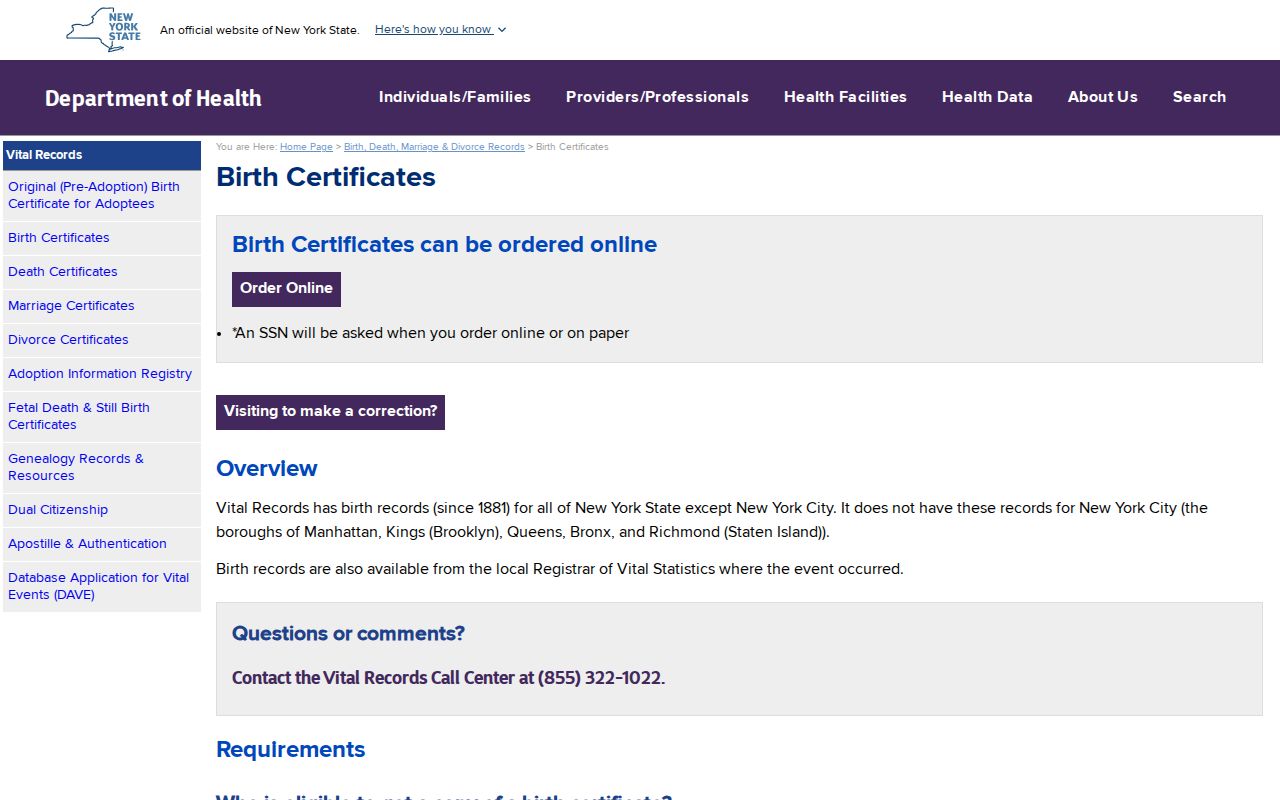
For a birth-family question, use the official program rather than trying to assemble sealed information from stray records. The NYS Adoption Information Registry is the state's official route for people born or adopted in New York. It separates non-identifying, identifying, and medical information and applies registration, eligibility, and consent rules.
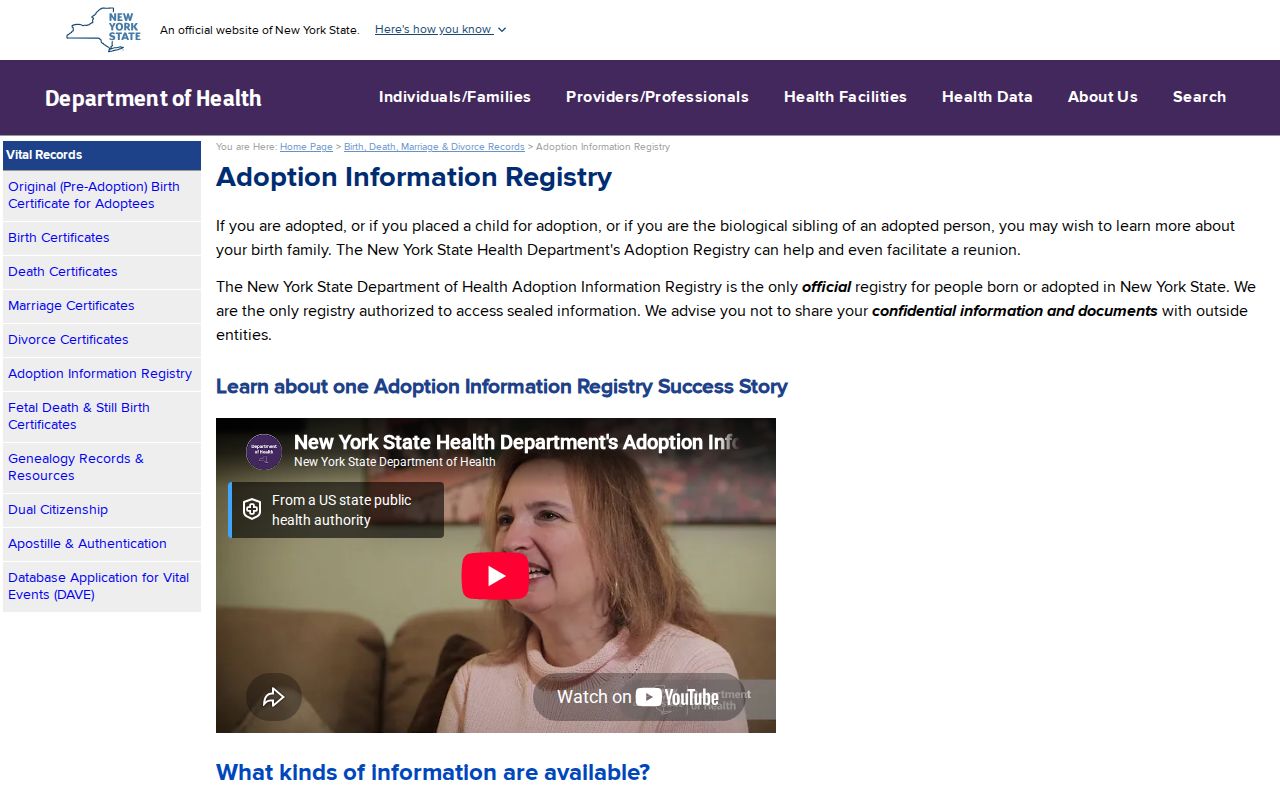
That family-reunion route is meaningful precisely because it protects the people involved. It is not a general method to identify birth parents or adoptees outside the program.
Staten Island Resident FOIL Fallbacks
When an agency keeps an operational record but has no public search, New York's Freedom of Information Law can be a fallback. FOIL creates a presumption of access to agency records, subject to exemptions for personal privacy, law-enforcement interference, confidential sources, medical information, and records made confidential by another statute. A request must reasonably describe existing records. An agency does not have to create a new report or collect material held by a different custodian.
The NYS DOH FOIL guidance says a requester should provide an email address, mailing address, and current telephone number. A denial appeal is due within 30 calendar days, and a written appeal determination is due within 10 business days. FOIL is not a path around the special laws for vital certificates, adoption, sealed court files, or protected voter records. For older local clues, NYPL's St. George History Collection and Historic Richmond Town's WPA card indexes can be more useful than a broad request.
Staten Island Resident Lookup Privacy
Some people and records must not be exposed through a resident lookup. New York's Address Confidentiality Program provides a substitute address for participants affected by domestic violence, stalking, sexual assault, human trafficking, and the other groups described in the program's current guidance. Confidential voter registration is kept separate and unavailable to public inspection or copying for four years except to election officials acting within their role. Sealed court matters, adoption records, many family matters, DMV addresses, signatures, and SSN fragments have their own protections.
Questions about protected information, a recording redaction, or an inaccurate court entry belong with the responsible custodian. Do not republish protected addresses or infer a physical location from a substitute address. A property record, registration match, court appearance, or historical directory entry does not establish a current residence. Correct an error where it entered the record rather than spreading it across more searches.
Lawful use. Use a Staten Island resident lookup for personal, lawful research such as family history, estate questions, or reconnecting. Repeated use of records to threaten, follow, intimidate, or harass someone can be criminal under New York law.
The Address Confidentiality Program explains the substitute-address protection. Treat an unavailable result as a privacy boundary, not a puzzle to defeat.