
Finding Staten Island Residents
There is no complete public roll of every Staten Island household. Instead, each custodian holds a record created for a specific purpose. The NYC Department of Finance ties a parcel to tax-map information. The Richmond County Clerk indexes recorded land instruments. The Board of Elections form checks one already-known voter. Courts identify parties in a matter, while historical collections can place a household at an older address. A record can identify an owner, a recorded party, an applicant, or a past occupant. It does not automatically establish that someone lives there today.
Match the starting point to the question. An address is strongest for a parcel and deed trail. A full name plus other confirming detail can be checked across court, license, and historical sources. An older surname often belongs in directories, newspapers, census material, and the local archive. Keep the source date beside every result, because a dated public record is evidence of that dated event, not a live profile.
- Enter a known address in the Department of Finance property portal and save the Borough, Block, and Lot, or BBL.
- Use that BBL in the Richmond County Clerk land-document search for instruments tied to the parcel.
- For a known voter, use the NYC exact-match form with the required identity details rather than seeking a street list.
- For an old household, compare a directory or newspaper entry with an available federal census schedule.
- When an online index stops, ask the named custodian, library, or archive which books, terminals, or request channel holds the next record.
Note: Ownership, a filing, or a historical directory entry can be useful evidence, but none alone proves a current household.
Staten Island Resident Records Offices
Staten Island is also Richmond County, but its practical records path is layered across city and county offices. The Department of Finance supplies the parcel starting point. The Richmond County Clerk is the local land-record counter. NYC agencies supply building and voter systems, and New York courts provide separate case-search routes. The county clerk can also help with Supreme Court record procedures, while the library and Historic Richmond Town hold the non-digital layer that a web search may miss.
The first contact should be the office that created the record. Asking a library to certify a deed, or a court to correct a tax account, will not move the search forward. The Staten Island street directory follows the full address chain when a named street is the starting point.
Richmond County Clerk
County Court House
130 Stuyvesant Place
Staten Island, NY 10301
(718) 675-7700
Land Documents Search
NYC Department of Finance
Citywide property and tax-map records for Staten Island parcels.
Property Information Portal
NYC Board of Elections
Staten Island Borough Office
1 Edgewater Plaza, 4th Floor
Staten Island, NY 10305
(718) 876-0079
Registered Voter Search
Staten Island Address Searches
The NYC Department of Finance Property Information Portal is the useful starting screen for an address. It accepts an address, intersection, or common place name, plus borough/block, a full BBL, condominium and co-op identifiers, and several special lot identifiers. For a BBL search, select Staten Island as the borough, then enter the block and lot. A successful borough/block search highlights the block and opens Tax Map History information.
The public parcel card organizes property, building, land, assessment, exemption, sale, and mortgage information. It can also link toward CityMaps and ZOLA. Read an owner mailing field, if shown in an account view, separately from the situs address. A situs is the physical parcel address; a mailing address is where official notices go and may belong to an office, bank, or another property.
See the official PIP search screen before beginning a Staten Island residents directory address trail.
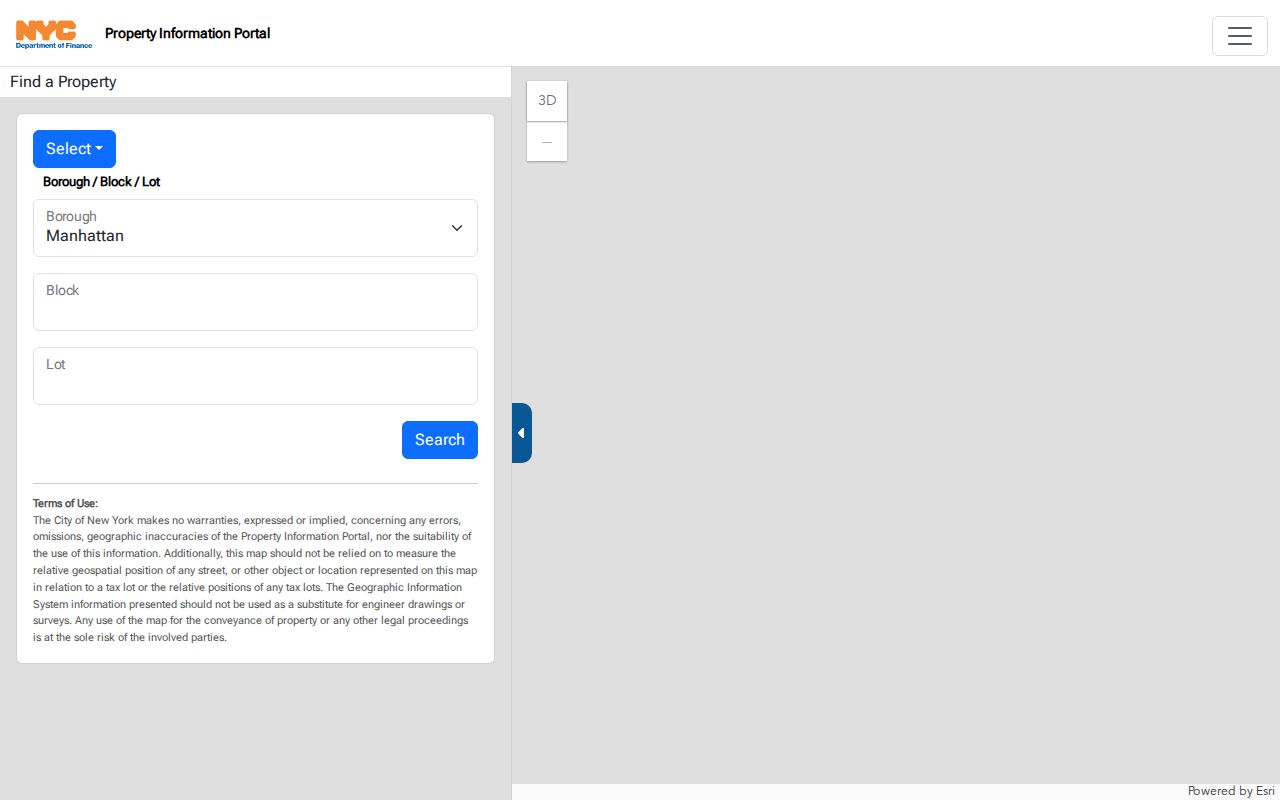
The PIP view shows why address and BBL modes should be recorded together before opening deeds or building records.
Staten Island BBL Record Links
BBL means Borough, Block, and Lot. In Staten Island research it is the common key between the finance parcel card, tax maps, deeds, and many building searches. Write down the BBL before changing screens. A street number can change, a road can carry a former name, and an older deed may use a subdivision or legal description instead of a modern mailing address. The BBL is not a person identifier, but it is a reliable way to keep the property trail together.
- Parcel
- A defined tax-map piece of land, identified by its BBL.
- Situs address
- The physical address attached to the parcel or building.
- Grantor
- The party transferring an interest in a recorded instrument.
- Grantee
- The party receiving that recorded interest.
Use a BBL search first for the current parcel, then compare document dates, party roles, and legal descriptions. A recorded mortgage, satisfaction, lien, or release can be important context, but it is not automatically a transfer of title or a record of occupancy.
Staten Island Deeds, Not ACRIS
Staten Island has a critical local exception within New York City: ACRIS covers Manhattan, Bronx, Brooklyn, and Queens from 1966 forward, but it is not the Staten Island deed portal. NYC directs Staten Island deed users to the Richmond County Clerk. Start with the Clerk’s Land Documents Search, then select the method that fits the information in hand.
| Clerk search tab | Best use | Research caution |
|---|---|---|
| Document Number | Open a known instrument | Save the number with the source date. |
| Party or Company Name | Find a named grantor, grantee, or business | A party may be a lender, trustee, or attorney. |
| Date Range | Narrow repeated names | Compare the BBL and instrument type. |
| Block and Lot | Follow one parcel | Use the current BBL as the starting key. |
| Book and Page | Locate an older citation | The landing page also has a special book/page mode. |
The clerk’s landing page does not state the earliest online index year. For older books, images, or copy questions, use the clerk counter and confirm the available format and current fee before ordering.
The official land-document page exposes the separate modes used in this Staten Island residents directory workflow.
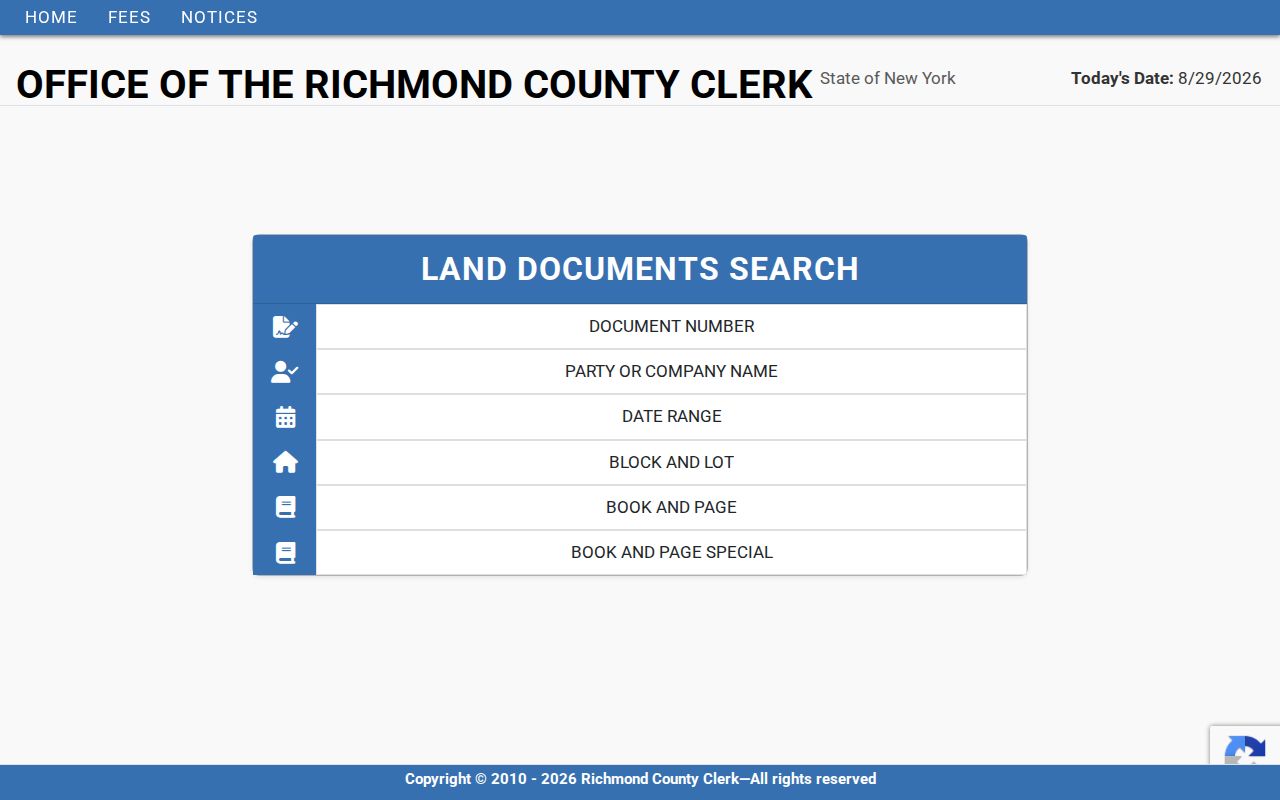
The six tabs make the BBL, party name, date, and old book/page paths visible on one official screen.
Staten Island Voter Verification
The NYC Registered Voter Search is a narrow verification tool. It requires first name, last name, full birth date, borough, and ZIP code, and it tells users to enter information exactly as recorded. Select Staten Island as the borough. The form returns a match or non-match decision for the supplied information. It is not a reverse lookup, a neighborhood roster, or a way to browse everyone on a street.
A non-match may arise from spelling, date, ZIP, apartment, borough, or registration-status differences. Confidential registrations are kept separate from public inspection. A broader voter-file request has its own rule: New York Election Law §3-103(5) requires an elections-purpose statement. That process does not turn the file into an unrestricted resident list.
Use the official voter form only when its required identity details are already known.
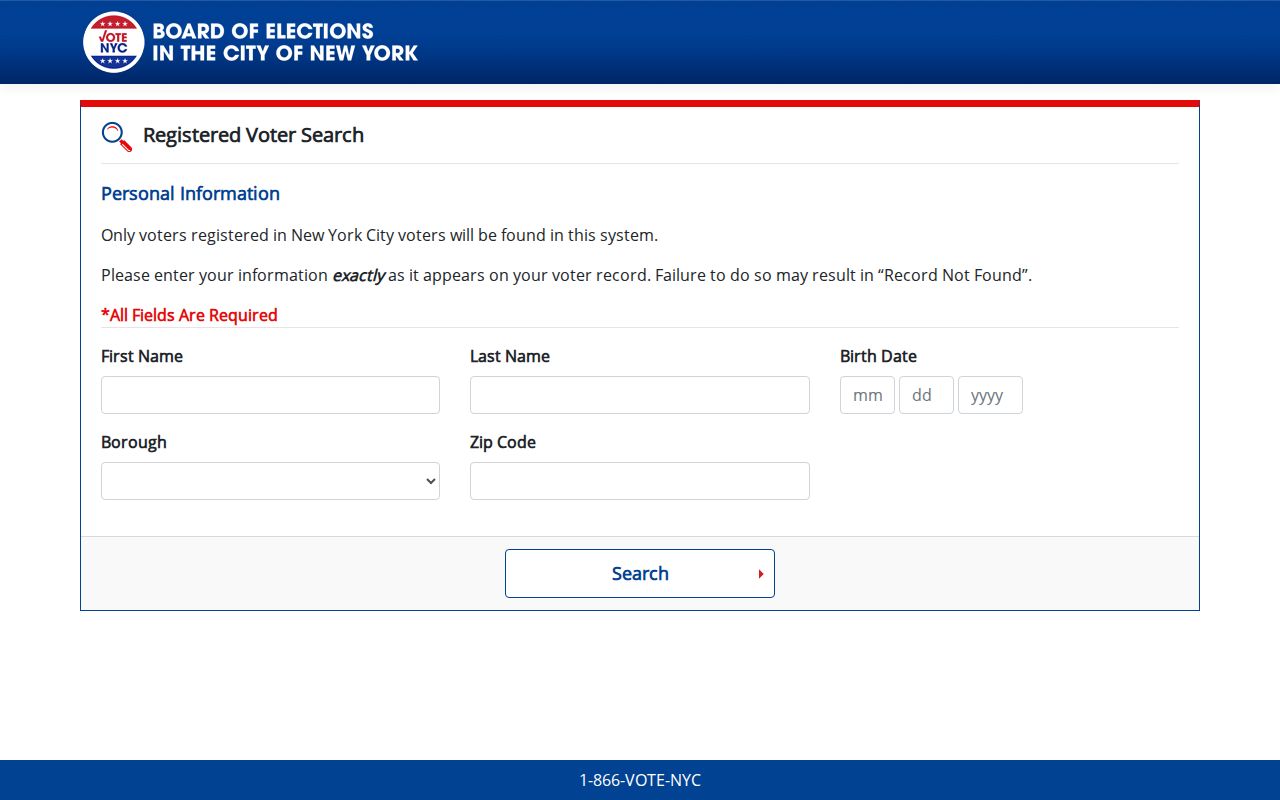
The required name, birth-date, borough, and ZIP fields show why this form confirms a known person rather than producing a list of neighbors.
Note: A voter match concerns the registration system, so confirm any separate address or identity question through the record custodian.
Current Staten Island Resident Directories
Current sources show different slices of Staten Island. The property portal is a parcel system. The clerk index lists parties to land instruments. DOB systems show applicants, representatives, licensees, and property events. Court records list case parties. Business and professional databases can confirm a public affiliation or credential. None is a universal household directory, and a named person may be connected to a property or filing without residing there.
| Current source | What it can establish | Keeper | Access route |
|---|---|---|---|
| Property Information Portal | Parcel, assessment, sale, mortgage, and map context | NYC Department of Finance | Public portal |
| Land Documents Search | Recorded parties and land instruments | Richmond County Clerk | Web index and counter |
| Registered Voter Search | Known-person registration check | NYC Board of Elections | Exact-field form |
| BIS and DOB NOW | Permits, filings, complaints, and licensees | NYC Department of Buildings | Public portals |
| License and entity searches | Credential or business affiliation | New York agencies | Agency-specific portals |
When the task is to sort out one particular name, use the Staten Island resident lookup workflow to compare independent records rather than relying on a single result.
Staten Island Building Record Split
Building history is divided between two NYC Department of Buildings systems. BIS searches legacy records by house and street, block and lot, BIN, or browse-block-and-lot modes. It also provides paths for complaints, permits, applications, violations, and certificates of occupancy. BIS warns that DOB NOW filings are not included and that some 2022 transactions may be missing after a data-center power outage.
DOB NOW covers newer public filing status, property details, permits, and licensee searches. Public viewing does not require an account according to the DOB manual. Check both systems when the date is unknown. A permit can help date a building change and identify a filing party, but it is not a household roster.
Practical check. A clean result in BIS is not a complete Staten Island building history. Search DOB NOW for newer filings before deciding the trail ends.
Staten Island Court Name Checks
The NYS e-Courts hub routes searches to WebCivil Local, WebCivil Supreme, WebCriminal, and WebFamily. The result and access rules differ by court. WebCriminal guidance allows a partial name search with at least three surname letters and two given-name letters, but it reports future appearances and does not show warrants, finished cases, or sealed matters. A court appearance is context for a named party, not proof that the party lives in Staten Island.
Public docket information may show parties, court, index or docket number, case type, and dates. A full order, disposition, or certified record normally comes from the court of original jurisdiction. Richmond Supreme Court and its clerk have separate counter and terminal routes. Bring the name variants, date range, and any index number, then ask the clerk which copy type is available. Do not infer facts from sealed, family, adoption, or juvenile records.
Staten Island License Connections
A public business or license file can add a carefully limited affiliation clue. The New York Department of State entity inquiry can identify a corporation, LLC, partnership, or assumed-name filing. The Department of State license directory and the NYSED verification search route researchers to public credential records. NYC DOB also has licensee-search paths connected to building filings.
Read the type of address shown before drawing a conclusion. An entity filing can list an agent, service-of-process address, or business address. A license result can confirm a credential or status. Neither proves that the named person is a Staten Island resident. Use it only as one dated record, then compare it with a parcel, deed, court, or historical source where appropriate.
The NYSED verification screen is one official route for checking a published credential.
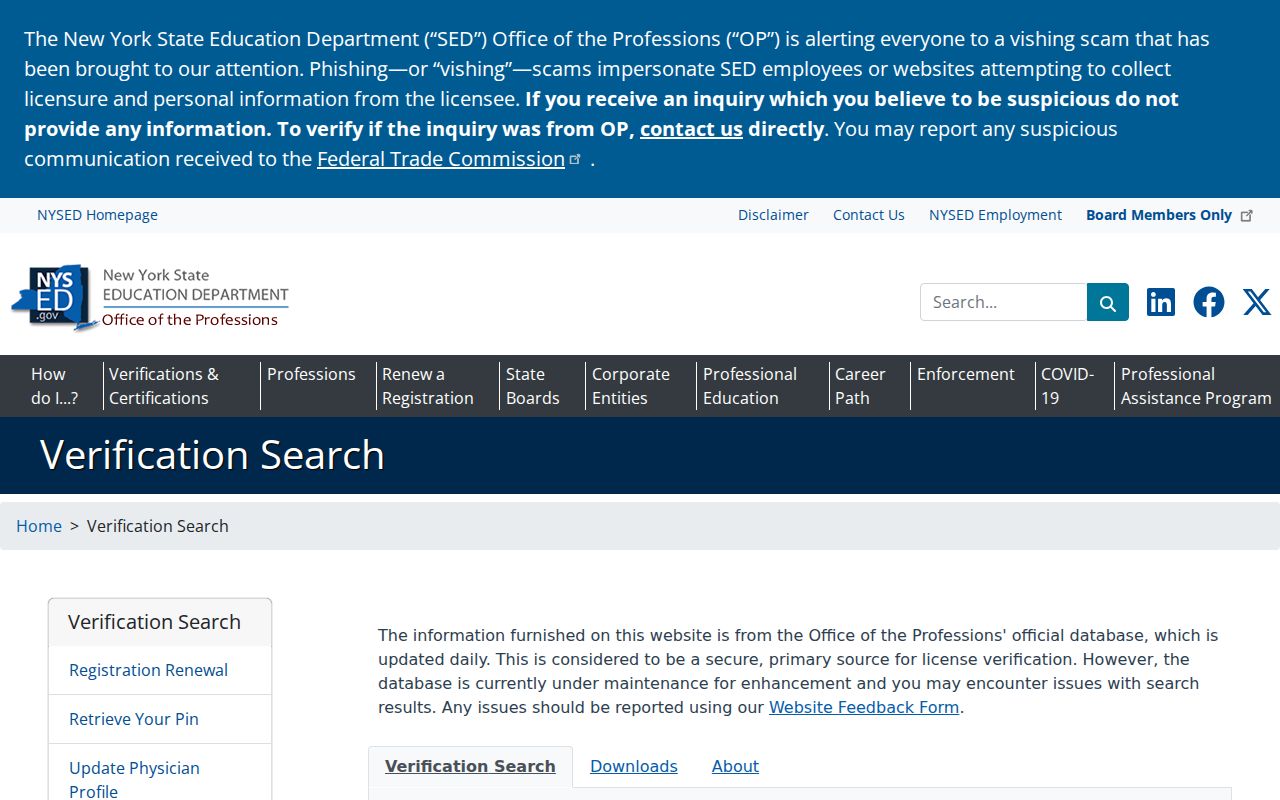
The public verification interface supports a credential check, while the other records in the Staten Island residents directory provide separate identity and address context.
Staten Island Family Record Routes
Vital records have a local custodian split. For a Staten Island birth, death, or marriage, the New York State vital-records page directs users to NYC Department of Health and Mental Hygiene or the NYC Marriage Bureau. The state office is not the ordinary certificate route for the five boroughs, although it retains New York divorce certificates. Birth, death, marriage, and adoption access uses special statutes and forms, not a general FOIL request.
Family-history research can instead begin with historical newspapers, cemetery sources, obituaries, probate files, census schedules, and local card indexes. For a birth-family question involving a sealed adoption, the NYS Adoption Information Registry is the official path. It offers non-identifying, identifying, and medical-information routes subject to eligibility, registration, and consent rules. It is not a general name-search database.
See the official state routing page before submitting a request for a Staten Island event.
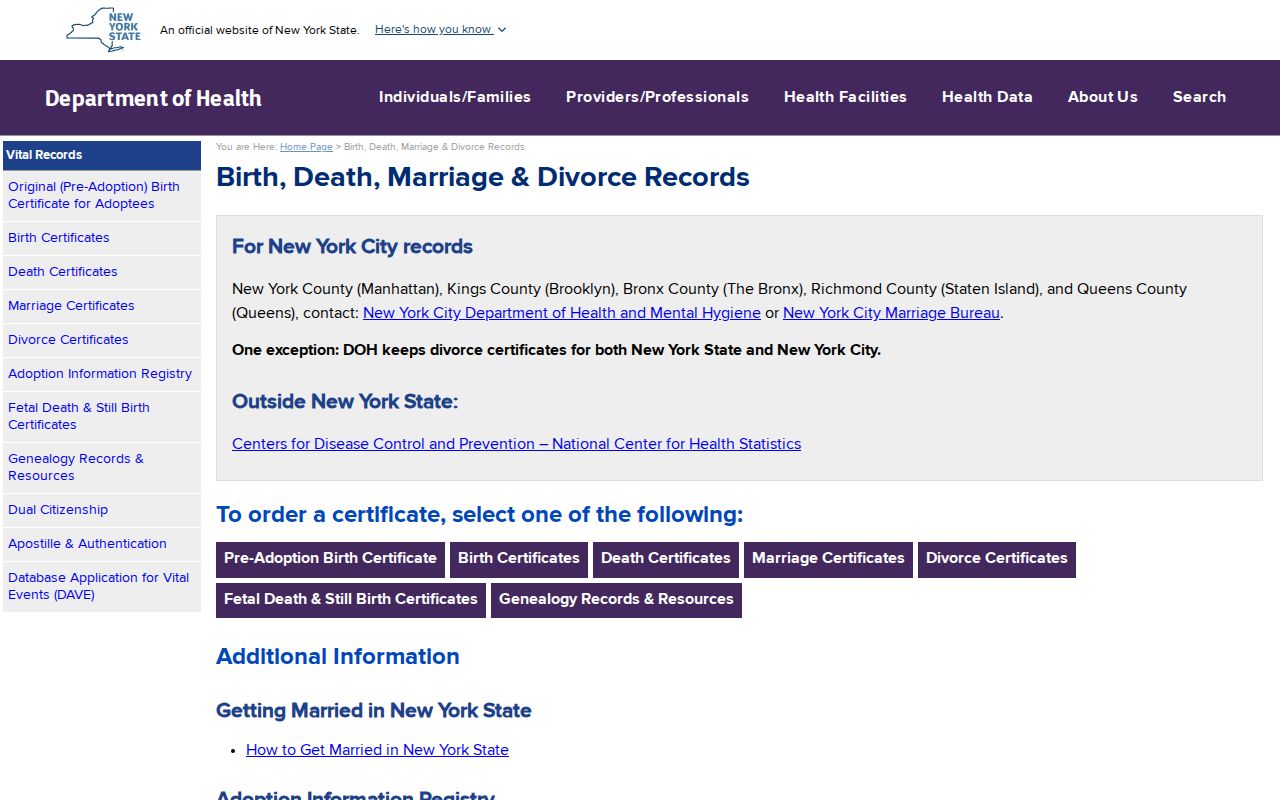
The routing screen is a useful reminder that an event in Richmond County follows NYC channels for most certificates.
Historical Staten Island Resident Directories
Historical research belongs in the Staten Island History Collection at the St. George Library Center and in the Historic Richmond Town research library. NYPL reports more than 300 bound local-history volumes from the last quarter of the nineteenth century to the present, a 1907 street atlas, nineteenth-century atlas microfilm, Staten Island Advance microfilm from 1921 to 2018, and a NewsBank index from 1991 forward. The collection also provides access to digitized Richmond County Advance material from 1886 to 1922 and selected digital databases, with a valid library card required for the stated History Collection resources.
A directory or newspaper item is a dated snapshot. It can connect a name, address, business, or family event, but it needs comparison with the page image and another source. The complete local run of every Trow, Polk, and telephone directory was not confirmed in the research. The Staten Island city directory page concentrates on the collections and how to read their entries.
Staten Island WPA Card Drawers
When a modern index goes quiet, the Staten Island Historical Society’s WPA-era card system can point to the older paper trail. The Search Room at Historic Richmond Town holds vertical files and 3-by-5 cards begun in the early 1940s. Its Vital Records of Staten Island Families collection occupies 47 drawers and indexes early wills, administrations, guardianships, deeds, mortgages, releases, newspaper notices, church records, tombstones, family Bibles, and private papers.
This finding aid is a local research asset, not a promise that every underlying record is online or unrestricted. Historic Richmond Town lists research-library hours on Friday from 1 to 4, with check-in at the Third County Courthouse and Visitor Center. Contact the institution before travel for directory reels, maps, or staff-assisted research. The Staten Island Historian, published from 1938 through 2016, adds local family, preservation, industry, and archaeology context.
Note: Search surname variants, Richmond County, Borough of Richmond, and former town names when an older Staten Island reference fails.
Staten Island Map Clues
Maps explain why an old address, lot, or name may not match a current screen. The 1907 NYPL atlas and nineteenth-century atlas microfilm give street and parcel context. The Library of Congress 1898 Staten Island Sanborn set contains 104 sheets. Its building footprint, construction material, and use help establish the physical setting of an older address, but they do not identify an owner or resident.
Compare a map with the BBL, deed legal description, directory street entry, and permit date. Older sources may say Richmond Town, Borough of Richmond, or another former town or village label. Save the cross street and map context as well as the house number. That prevents a street-name change or subdivision from looking like a missing record.
Staten Island Privacy Limits
New York FOIL, Public Officers Law Article 6, gives a route to existing agency records but has privacy and other exemptions. It does not require an agency to create a new list, defeat a special confidentiality statute, or disclose protected information. Vital certificates, confidential voter registrations, sealed court matters, private medical information, and DMV address data have separate limits. The New York State Address Confidentiality Program uses a substitute address for qualifying participants in public records.
Use records for lawful personal research and never to stalk, threaten, harass, or harm someone. Be wary of deed-copy mailers and court calls that demand urgent payment. Richmond Supreme Court warns that impersonators can spoof caller ID. Independently find the number through an official government page before paying, sharing documents, or acting on a demand. If an official record looks wrong, ask its custodian for the correction or appeal route.
Privacy first. Do not publish full birth dates, signatures, identification fragments, protected addresses, or sensitive family details copied from a public record.